Services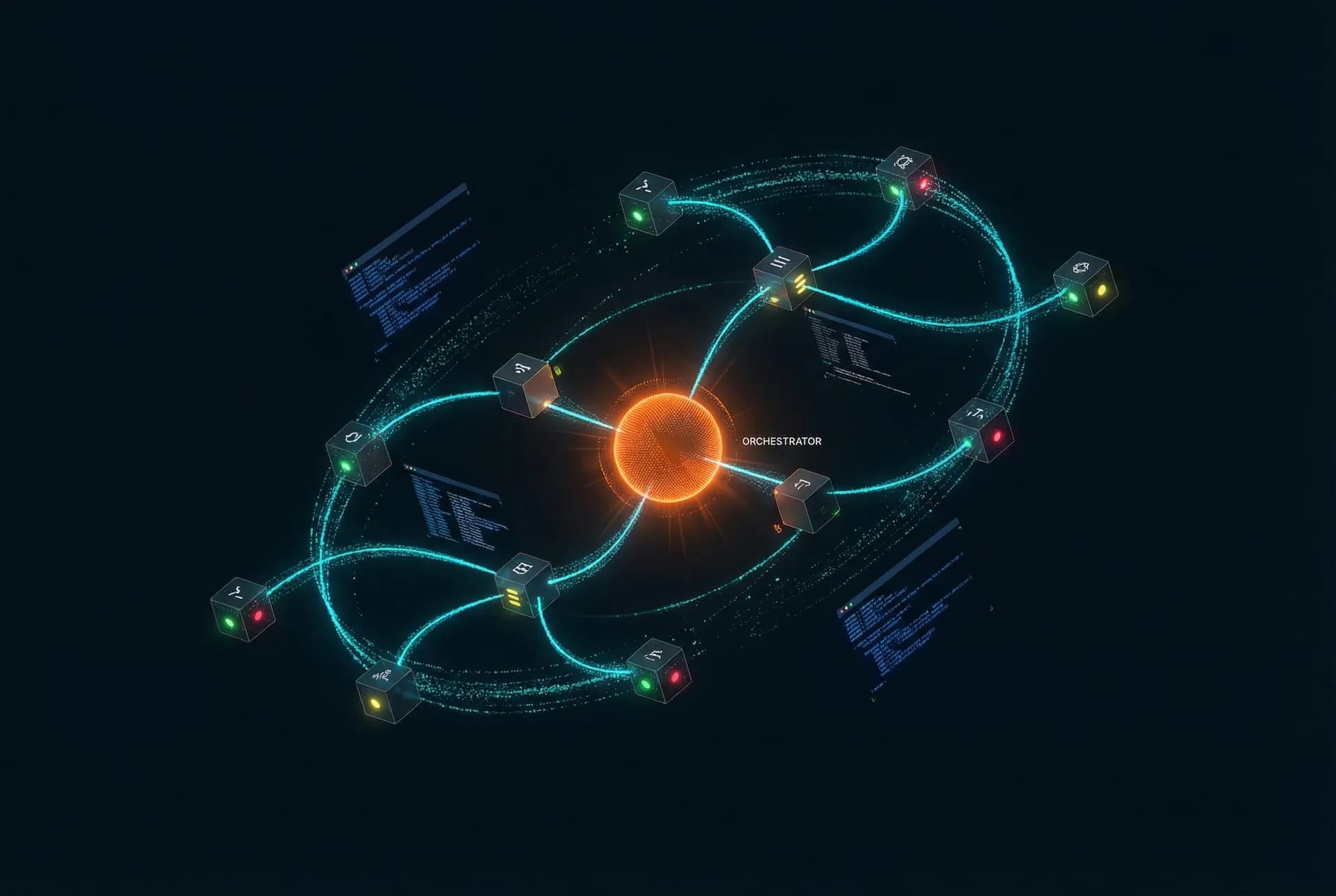
AI & Automation
Pipelines that run without you
I build multi-agent systems, content automation pipelines, OCR workflows, and AI integrations. These are production systems handling real throughput, not proof-of-concept notebooks. I've shipped and maintained them myself.
What I automate
Multi-agent pipelines, content automation, OCR, and AI integrations — all production-ready.
Multi-Agent Pipelines
I architect systems where agents hand off tasks to each other (research, writing, review, publishing) without human checkpoints in the loop. Built on Claude's agent SDK with real orchestration.
- MGT Mission Control: agent orchestration backend
- 20+ specialized agents deployed to production
- Parallel execution with dependency-aware scheduling
Content Automation
Raw footage or source data in, formatted and published output out — with no manual steps between recording and publishing. Video processing, transcript generation, clip extraction, and multi-platform distribution.
- MGT Factory: content automation microservice
- Automated clip detection and export
- Multi-platform publish workflows
OCR & Document Processing
Extract structured data from PDFs, images, and scanned documents using Claude Vision OCR and route it directly into databases. Production pipelines on real estate title documents and tournament stat sheets.
- Title document extraction for real estate workflows
- Structured data output to Postgres
- Error correction and confidence scoring
AI Integrations
I wire AI capabilities into existing production apps — classification, document generation, MCP tool servers, and custom inference pipelines. Claude, OpenAI, and open-source models integrated without a platform rebuild or new backend.
- MCP coordinator middleware routing tool calls across 5 servers
- Claude-backed Discord moderation
- AI-assisted CRM data enrichment
The automation sequence
From manual workflow to deployed pipeline — built against your real data from day one.
01
Workflow Mapping
I map your current manual process step by step. Where does data come from? What transforms happen? What's the output? I need to understand what's manual before I can automate it.
02
Architecture Design
I design the pipeline architecture: which steps get AI, which get deterministic logic, where humans stay in the loop. You get a system diagram and cost projection before any code is written.
03
Pipeline Build
I build and test against your real data, not sample inputs. Each pipeline stage gets error handling, retry logic, and observability. You see outputs from day one.
04
Deploy & Optimize
Production deployment with monitoring dashboards, alerting, and cost tracking. I optimize prompt costs and latency over the first 30 days based on real usage patterns.
Who this is for
You already know what's manual. I build the thing that makes it automatic.
Ops-heavy businesses
You have staff manually moving data between systems — repetitive work with rules clear enough for a pipeline to own.
Content teams
You produce at volume and need processing, formatting, and distribution handled by a pipeline — not headcount.
Technical founders
You know AI belongs in your product — you need a developer who has run 20+ specialized agents in production, not a prompt engineer who demos in notebooks.
Production systems
MGT Studio
Multi-module command center. /control handles task orchestration, /factory runs content pipelines, /ops surfaces system health. 20+ specialized agents deployed to production.
MGT Factory
Content automation backend. Takes raw video input and outputs formatted clips for YouTube, X, and Instagram. Zero manual steps between recording and publishing.
MGT Mission Control
Agent orchestration layer. Routes tasks to specialized agents in parallel, tracks execution status, and surfaces failures before they reach production.
Claude Agents (Open Source)
Public repo of production-ready agent implementations. github.com/davidolverson/claude-agents
Stack I use
Claude API (claude-sonnet-4-6)
OpenAI API
Python (pipelines)
TypeScript (integrations)
LangGraph / custom orchestration
Postgres + vector search
FFmpeg (media)
Railway / Fly.io
Pricing
AI automation projects range from $500 to $2,499 depending on pipeline complexity. Single-workflow automations with one AI stage start around $500. Multi-agent orchestration systems with monitoring, multiple data sources, and production observability run $1,499 to $2,499. I scope everything after understanding your actual data flow. No guessing.
Related case studies
FAQ
What business processes can be automated with AI?
Document processing, content generation, data classification, customer support triage, lead enrichment, report generation, and any repetitive workflow with clear rules. If your team copies data between systems or follows the same steps repeatedly, it can be automated.
How much does AI automation cost for a small business?
Single-workflow automations with one AI stage start around $500. Multi-agent orchestration systems with monitoring and multiple data sources run $1,499 to $2,499. I scope everything after understanding your actual data flow, so you get an exact number before any code is written.
Do you integrate with existing tools?
Yes. I've integrated with Postgres, Supabase, Notion, Google Sheets, Slack, Discord, S3, and dozens of REST APIs. If it has an API, I can connect it.
How long does an AI automation project take?
Simple single-stage automations: 1-2 weeks. Multi-agent pipelines with custom orchestration and monitoring: 4-8 weeks. I build against your real data from day one, so you see working outputs early.
What if the AI makes mistakes?
Every pipeline includes confidence scoring and human-review checkpoints for edge cases. I design for graceful failure. Bad outputs get flagged, not shipped. The system improves over time as I tune prompts against real failure cases.
Stop doing it manually.
Describe the workflow. I'll map out an automated pipeline and tell you exactly what it saves you.
From the blog
Related reading
AI Automation for Small Business: What Actually Works
Cut through the hype. Real automation workflows that save hours per week, with cost breakdowns and implementation timelines.
Read articleAI Agents in a Solo Dev Workflow
How Claude Code, MCP servers, and autonomous agents let one developer ship what used to take a team of five.
Read articleMission Control: Building a Cron Registry for a Solo Dev Empire
Centralized job scheduling, heartbeat monitoring, and execution history across ten projects from one admin panel.
Read article